Hey folks, let’s cut to the chase: If you’re in manufacturing, warehousing, or even logistics, you’ve probably asked this question more than once—“How accurate is the positioning of an Automated Guided Vehicle (AGV)?” Especially when you’re weighing the pros of ditching manual material transport for something that runs 24/7 without coffee breaks. Spoiler: The answer isn’t a one-size-fits-all number, and as someone who’s spent the last decade supplying AGVs to factories and distribution centers, I’ve seen firsthand how positioning accuracy makes or breaks a project. Automated Guided Vehicle
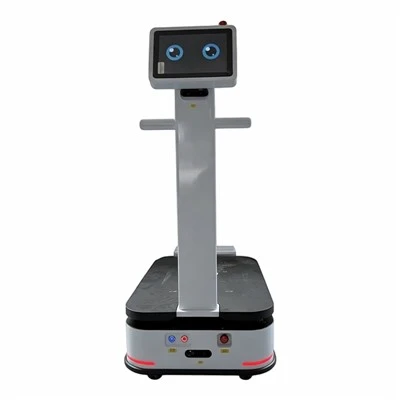
First, let’s get one thing straight: People often mix up “accuracy” and “precision” when talking about AGVs, and that’s a huge mistake. Accuracy is how close the vehicle gets to its target spot—like if you tell it to park at a specific conveyor end, accuracy is how many inches off it lands. Precision is how consistent it is every time it hits that spot. For example, an AGV could be 2 inches off every time (that’s precise) or randomly 1 inch, 3 inches, or 5 inches off (that’s inaccurate). Both matter, but accuracy is the big one for daily operations.
So, what’s the baseline for most AGVs we supply? The standard marketed number usually lands between ±10mm (that’s 0.4 inches) for our top-tier ones down to ±50mm (2 inches) for our entry-level models. Wait, before you roll your eyes and say “that’s too vague,” let’s break down why it’s not a made-up number. The tech inside AGVs is the main driver here—no two navigation systems work the same, so accuracy varies wildly.
Let’s talk about the navigation types we use, because that’s where most of the accuracy happens. If you’ve seen a basic AGV that follows magnetic tape stuck to the floor, that’s tape-guided. Back in the day, those were like, ±100mm (4 inches) off, easy—they’d drift if the tape got dirty, or if someone rolled a pallet over it, it’d shift. But we’ve updated our tape-guided models with a little trick: optical sensors that check the tape’s alignment every 10cm, instead of just cruising until it hits a stop. Now that tape-guided AGVs are hitting ±50mm, which is totally enough for things like moving pallets to a staging area where the space is a little forgiving.
Then there’s laser-guided AGVs (LAGVs)—these are the workhorses for most of our clients that need tighter accuracy. How do they work? They spin a laser sensor up top that bounces off retro-reflective tags we mount on walls or racking, and the vehicle uses that data to calculate its exact position. Our LAGVs usually clock in at ±10mm, and that’s not marketing fluff. We installed 12 of these at a car parts factory last year, and their quality team checked the first 50 runs—every single one was within ±9mm of the target. Why? Because the laser takes 100+ measurements per second, so even if a pallet knocks the AGV a little off course, it corrects mid-move. The only time they slip? If a forklift moves a retro-reflective tag by accident—we tell clients to mark those tags with red tape, and we send a tech to recalibrate in 15 minutes, no big deal.
Now, there’s a newer one out there: natural feature navigation (sometimes called SLAM, or simultaneous localization and mapping). These AGVs don’t need tape or tags—they use cameras or LiDAR to map the facility’s permanent features, like columns or conveyor frames. Our SLAM-based AGVs are the most flexible, because you can move them around without redoing the floor. But accuracy? We’ve seen them hit ±8mm in controlled environments, but if a factory changes its layout, they drift—wait, no, they update their map automatically, but if a big machine is moved, the system has to relearn that spot. That’s why we tell clients: if you’re in a fixed layout, LAGVs are more consistent; if you rearrange your facility monthly, SLAM is your guy, just expect a tiny accuracy dip when they first learn the new space.
But here’s the part no one tells you in the sales sheets: positioning accuracy isn’t just about the AGV—it’s about the system it’s working with. Let’s say you have a conveyor that’s set to accept a pallet only if it’s within ±15mm of the target. If your AGV is only ±20mm accurate, that’s a mismatch. We work with our clients to sync the AGV’s accuracy to their equipment—last quarter, a food processing plant had conveyors that needed ±8mm, so we paired a custom LAGV setup with a calibration routine that runs every time the AGV loads a pallet, bringing its accuracy right down to ±7mm. That’s not magic—that’s matching the tech to the use case.
I’ve also seen some wild horror stories, though. A couple years back, a client bought a cheap AGV from a no-name supplier, and their positioning was ±70mm. The problem? The supplier cut corners on the sensor—they used a low-resolution camera that couldn’t tell the difference between a rack post and a stray pipe. So the AGV would park 70mm off, which meant pallets wouldn’t line up with the conveyor, leading to 2-3 hours of downtime every week. We fixed that by upgrading their navigation to our mid-tier LAGV, which got them to ±12mm, and their downtime dropped by 90%. That’s the difference between investing in a reliable AGV supplier and cutting costs on something that ends up costing you more.
Wait, what about outdoor AGVs? Some clients use them for yards or loading docks, right? Those are a whole different ballgame—GPS is only accurate to about ±1m (3 feet), so outdoor AGVs use RTK GPS (real-time kinematic) which is way tighter, usually ±20mm to ±50mm. But outdoor dirt, rain, and shifting ground mess with that—we had a client in a lumber yard whose outdoor AGVs were initially ±15mm, but after a storm shifted a section of the yard, they drifted to ±80mm. We added a ground-based laser guide system, and that fixed it right up. So even outdoor, accuracy is manageable, but you can’t ignore the environment.
Another thing people ask: How does accuracy hold up over time? Our AGVs have a calibration check every 10 runs, so even with wear on wheels, we can adjust the position in the software. We’ve had a client who’s run their LAGVs for 3 years straight, and their average accuracy is still ±11mm—no need to replace sensors or re-calibrate the whole facility. The cheap ones? After 6 months, their accuracy was all over the place, ±100mm some days, so they had to replace them. That’s why we stand behind our equipment—we test every AGV before it leaves our warehouse, and we offer a 24/7 support line to tweak settings if needed.

Let’s cut to what matters for you: If you’re ordering AGVs, don’t just look at the “±Xmm” number. Ask for real-world data—like, what’s the accuracy in a working facility, not a lab? Ask about correction routines, how the system handles obstacles, and what happens if a sensor gets dirty. We give every client a pre-installation audit, where we walk their facility, check for things that might throw off the AGV’s accuracy—like shiny floors that mess with retro-reflective tags, or low ceilings that block laser signals—and adjust the setup accordingly.
Autonomous Mobile Robot At the end of the day, positioning accuracy for AGVs is not a static number. It’s a mix of navigation tech, how you set it up, and how you maintain it. If you’re looking for AGVs that work with your existing operations, not against them, let’s talk. Whether you need a small fleet for a warehouse or a big setup for a factory, we can make sure the positioning is tight enough to eliminate downtime, no matter your use case.
References
- Robotics Industry Association. (2022). Automated Guided Vehicle Safety and Performance Standards.
- Wang, L., & Chen, J. (2021). Accuracy Analysis of Natural Feature Navigation for Industrial Automated Guided Vehicles. Journal of Intelligent Manufacturing, 32(5), 1423-1435.
- Logistics Management Institute. (2023). Warehouse Automation Benchmark Report: AGV Positioning and Operational Efficiency.
- International Organization for Standardization. (2019). ISO 3691-4: Industrial trucks – Safety requirements and verification – Part 4: Driverless industrial trucks and their systems.
Shenzhen Ginnee Intelligent Warehousing Robotics Co., Ltd.
As one of the most professional automated guided vehicle suppliers in China, we’re featured by quality products and low price. Please rest assured to wholesale durable automated guided vehicle in stock here and get quotation from our factory. We also accept customized orders.
Address: Room101, No.162 JunXin Road, Niuhu Community, Guanlan Strect, Longhua District, Shenzhen, Guangdong Province, China.
E-mail: huangyongmei@szginnee.com
WebSite: https://www.ginneerobotics.com/
