If you’ve walked through an automotive assembly line, watched a drone warehouse pick and pack orders, or even seen a medical robot place a suture with sub-millimeter precision, you’ve seen industrial robots doing work once thought impossible for machines. But here’s a truth most of our customers don’t ask about right away: these robots aren’t perfect. A robotic arm welding a car chassis might miss a seam because of a slightly warped metal panel. A packaging robot might fumble a delicate glass bottle because the packaging line’s conveyor shifted fractionally overnight. For years, industrial robots operated on rigid, pre-programmed rules—do X at Y coordinate, always, no exceptions. If something deviated even a little, they’d pause, error out, or make a costly mistake. That’s why, as an industrial robot supplier, we’ve spent the last decade asking: how do we teach these machines to learn from experience, just like the human operators who worked these lines before them? Industrial Robot
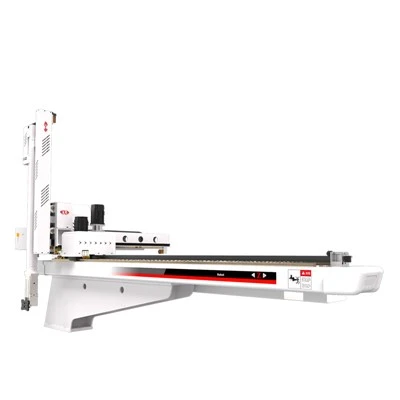
Let’s start with what “learning from experience” actually means for an industrial robot. It’s not like teaching a kid to ride a bike, though there are parallels. For a human line worker, experience is built on thousands of small, unplanned moments: a tricky weld that takes two extra passes, a part that’s heavier than its label says, a conveyor that slows down every time a certain batch of parts rolls through. For a robot, experience is data—millions of tiny, high-fidelity data points captured every second from sensors, cameras, and joint encoders. The problem most legacy robots have is they can only react to what’s programmed, not what they’ve learned from past success or failure. Five years ago, if a robot dropped a part, it’d be sent to maintenance, and engineers would rewrite the code to fix that specific part drop. Now? We want that robot to remember that specific part’s size, weight, and how it felt when it slipped, so next time it picks that same part, it adjusts its grip strength automatically.
The core technology making that possible is called reinforcement learning (RL), but we’ve had to adapt it specifically for industrial settings, not the shiny, controlled environments tech startups demo at conferences. Most RL you see in movies or news is for virtual environments, where a robot can try a task millions of times without any real cost. In a factory, if a robot drops a $500 metal stamping, that’s real money, real downtime, real hassle. So we built what we call “sim-to-real transfer”—a system where we first train a digital twin of the robot in a virtual factory, where it can make as many mistakes as it needs without costing anything. The digital twin mimics every variable of the real world: friction on the conveyor, weight of parts, air pressure in the robot’s joints, even the slight warping of metal panels. Once the virtual robot masters a task 95% of the time, we transfer that learning to the physical robot. That’s not new in theory, but we’ve optimized it for the mess of real factories.
Last year, we worked with a mid-sized automotive parts manufacturer that was struggling with a welding line. Their old robot would reject 2% of welds due to panel misalignment, which added up to 1200 defective parts a month, costing them over $180,000 annually. We equipped their new robots with our RL system: first, we built a digital twin of their line, used 10,000 real weld samples from their operators as training data, and let the virtual robot practice adjusting its weld path for misaligned panels. After three weeks of virtual training, we deployed the physical robot. In the first month, defect rates dropped to 0.2%. When we checked in three months later, the robot had even learned a new trick: it noticed that certain batches of steel were softer, so it adjusted its welding heat on its own, without any new code from engineers. That’s learning from experience—not just executing a pre-written task.
But RL is only part of the story. Industrial robots also need to build a “memory” of their work, something we call experience replay, but tailored to their specific tasks. Most modern robots have sensors, but they only store data for short troubleshooting. Our robots store every successful and failed task in a cloud-connected memory bank, organized by part type, time of day, line conditions, and even operator notes. For example, a packaging robot might note that every Monday, a batch of plastic bottles is slightly hotter from the extrusion process, so they expand a little. The next Monday, the robot will pull that experience from its memory, adjust its grip to account for the expanded bottles, and avoid drops. This isn’t general AI—it’s task-specific, which is critical for our customers. We don’t build robots that can do every job; we build robots that get better at their exact job, every day, from their own experience.
Another big piece is human-in-the-loop learning. Even with all the data and simulations, robots still run into things no one has ever seen before. Last quarter, one of our electronics assembly robots encountered a new, unplanned issue: a small plastic tab on a circuit board was slightly off-center, something no operator had reported before. The robot paused, flagged the issue, and suggested a minor adjustment to its placement path. The line operator approved the adjustment, and that experience was added to the robot’s memory. The next time the robot encountered that same part, it fixed the issue on its own. This is key because it combines the best of human judgment and machine efficiency. The robot handles the repetitive task of noticing small patterns from experience, and the human stays in control for rare, novel events.
There’s a common myth that teaching robots to learn from experience means replacing human workers. That’s the opposite of what we’ve seen. The line workers we’ve partnered with tell us their jobs changed from repetitive, high-stress manual tasks to troubleshooting, training, and optimizing the robots. For example, the welding line operators at that automotive parts plant we worked with don’t spend their days standing for 10 hours a day checking welds. They now spend their time analyzing the robot’s experience data, suggesting small tweaks to the training model, and handling rare issues the robot hasn’t encountered before. That’s not replacement—that’s upskilling, and our customers tell us it’s one of the biggest benefits of this technology.
Of course, it’s not all smooth sailing. There are big challenges to making this work reliably in industrial settings. First is data quality. A robot’s experience is only as good as the data it collects. If a sensor is slightly off, the data it gathers will be wrong, and the robot will learn bad habits. That’s why we spend as much time calibrating sensors as we do building the learning algorithms. Second is security. When robots are connected to the cloud to store experience data, they become targets for cyberattacks. We’ve built end-to-end encryption for all data, and strict access controls, so only authorized operators can adjust the robot’s learning model. Third is scalability. Every factory is different, every line is different, every task is different. A system that works for a car welding line won’t work for a food packaging line, which has to account for things like temperature, humidity, and fragile food products. We’ve solved this with modular learning models—we build core algorithms that work across all industries, then tailor them to specific tasks with customer-specific training data.
As an industrial robot supplier, our job isn’t just to sell a robot that works when it’s installed. It’s to sell a robot that gets better over the course of its lifetime, that adapts to changes in your line, that reduces downtime and waste, and that works with your team, not against them. Five years ago, if you’d asked our customers what they wanted from an industrial robot, they’d have said “accuracy” and “speed.” Today, they say “flexibility” and “adaptability.” And the only way to get that is to teach robots to learn from their own experience, just like the human workers that have been operating these lines for decades.
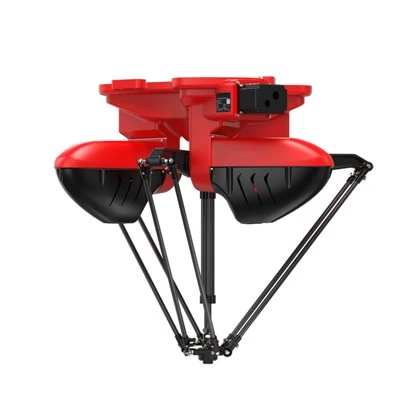
If you’re a factory owner, line manager, or operations lead tired of rigid robots that can’t keep up with small changes on your floor, we’re here to help. We’ve worked with hundreds of manufacturers across industries, from automotive to food and beverage to electronics, to build robots that learn from experience and deliver real, measurable results for their bottom line. Whether you’re dealing with high defect rates, unexpected downtime, or the need to reconfigure your line quickly to meet new demand, we can show you how our industrial robots can adapt to your unique needs, just like a skilled human operator. To learn more about how we can help your operation, reach out to our team to schedule a consultation, where we can walk you through case studies specific to your industry, show you how our learning robots work, and answer any questions you have. We don’t believe in one-size-fits-all solutions, and we don’t believe in selling you a robot that’s outdated before it’s even fully deployed. We build robots that grow with your business, every day, through the experience they gain on your floor.
Industrial Robot References
- Kober, J., Oztop, E., & Peters, J. (2013). Reinforcement learning for robotics. Robotics and Autonomous Systems, 61(12), 1617-1630.
- Jakimovski, P., Brell-Cokcan, S., & Reinhold, S. (2020). Sim-to-real transfer for industrial robotic manipulation: A survey. IEEE Transactions on Robotics, 36(6), 1605-1623.
- Ford, H. W., & Desai, M. (2021). Human-in-the-loop learning for industrial robotics: Benefits and challenges. Journal of Manufacturing Systems, 60, 782-793.
- Lee, S., Kim, J., & Park, H. (2022). Experience memory systems for industrial robots: Enhancing adaptability in dynamic manufacturing environments. International Journal of Production Research, 60(18), 5521-5538.
Robotic Technology (GD) Co., Ltd.
Robotic Technology (GD) Co., Ltd. is one of the most experienced industrial robot manufacturers and suppliers in China, also supports custom service and one year warranty. Please feel free to wholesale CE approved industrial robot for sale here from our factory. Contact us for quotation.
Address: Room 102, No. 30,Hengfeng 2nd Road,Daguo, Changping Town, Dongguan City,Guangdong,China
E-mail: admin@iroboticplus.com
WebSite: https://www.rb-tic.com/
