Hey everyone, I get asked this question all the time by folks looking for pin shafts—whether you’re building a bike frame, assembling a piece of industrial machinery, fixing a gate hinge, or even putting together a custom furniture build: “What’s the standard size of a pin shaft?” Pin Shaft
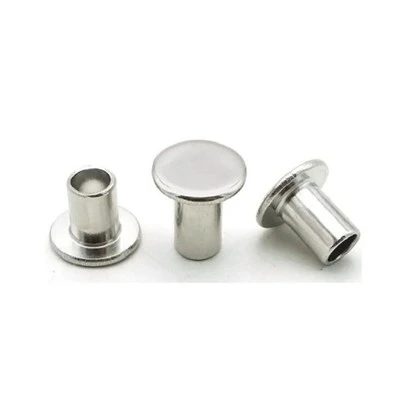
Full transparency here: I’ve been selling pin shafts for over a decade, and let’s be real—there’s no one-size-fits-all magic number. But there are set industry standards, plus a bunch of common off-the-shelf sizes that most people grab first. Today I’m breaking down the actual specs, when you can use a standard size, when you need to custom order, and why “standard” isn’t one straight answer.
First, let’s get on the same page about what a pin shaft actually is for those new here. It’s not a fancy hinge pin or a bolt—it’s that small, usually cylindrical metal (wait, sometimes stainless steel, zinc-plated steel, even plastic for low-load jobs) rod that holds two parts together, lets them pivot, or locks a component in place. Think of the pin that keeps your bike pedal attached to the crank arm, the pin holding a lawnmower blade on, or the pin that keeps a trailer hitch from coming loose. They’re workhorses, and picking the wrong size = wobbly parts, broken equipment, or worse.
Now, the main standards people care about come from two places: the American National Standards Institute (ANSI) in the U.S., and the International Organization for Standardization (ISO) globally. I work with both because my customers are everywhere, so I’ll cover the ones that actually matter for real-world use, not just textbook jargon.
Let’s start with ANSI, since that’s what most North American small-business and home builders reach for. The go-to sizes here are nominal diameters—meaning they’re the approximate outer width of the shaft, measured right at the thickest point (not counting any grooves or shoulders, if they have ’em). The most common off-the-shelf ANSI pin shaft diameters I stock are 1/8”, 3/16”, 1/4”, 5/16”, 3/8”, and 1/2”. Wait, that’s just inches? Yeah, ANSI inches still rule a lot of industrial and DIY spaces in the U.S., no surprise.
But it’s not just the diameter—length matters a ton, too. A 1/4” shaft that’s 1” long works for a tiny hinge; a 1/4” shaft that’s 3” long is for a tractor linkage. The standard lengths for those ANSI sizes go from like 1/4” (for super small parts) up to 12” or more, but most people buy lengths between 1/2” and 6” for everyday projects. Also, most standard pin shafts have a slight chamfer (beveled edge) on the end—like a tiny slope—so they slide into holes easier, no fighting with a wobbly pin. That’s a small detail, but it’s why people buy my standard pins instead of grabbing a random rod from the hardware store.
Now for ISO, the global standard that’s big in Europe, Asia, and for any international industrial projects. ISO uses metric, duh. The common standard diameters here are 3mm, 4mm, 5mm, 6mm, 8mm, 10mm, and 12mm. Same logic as ANSI: nominal diameter, lengths usually 5mm up to 30mm, with chamfered ends too. I keep both ANSI and ISO in stock because if a customer from Germany needs an 8mm pin for a packaging machine, I can’t send them a 5/16” (which is almost 7.94mm, for the nerds) and call it close—especially not for heavy-duty stuff.
But wait, let’s talk about when “standard” isn’t enough. A lot of people ask, “Can’t I just buy any of those common sizes?” and the answer is… almost, but not for critical jobs. For example, if you’re building a car trailer’s hitch pin—that’s a safety component—you don’t want a random pin. The Society of Automotive Engineers (SAE) has specific specs for hitch pins, which are a subset of pin shafts, so you have to hit exact tolerances (no wiggling) for safety. Same with medical device parts—ISO 13485 has strict size requirements there, so off-the-shelf won’t cut it.
Another thing: not all pin shafts are straight cylinders. A lot of standard pin shafts have a “shoulder”—a tiny step where the diameter gets wider partway along the length. That’s called a shouldered pin shaft, and those have their own standard sizes too. The shoulder diameter is usually 1/32” or 1/16” bigger than the main shaft, to keep it from slipping through a part. I stock both straight and shouldered standard pins because they’re the two most requested.
Wait, what about tolerance? That’s the fancy word for how precise the shaft has to be to fit a hole. Standard pin shafts have a tolerance of like ±0.0005” for ANSI, or ±0.01mm for ISO. That means if it’s labeled 1/4”, it’s actually between 0.2495” and 0.2505”—super tight. If you buy a random rod from the hardware store, it might be 0.255”, which is too big, or 0.245”, too small, and it’ll either get stuck or rattle. That’s why my customers trust the standard sizes I sell—they’re precision-machined to fit the exact hole specs.
I get a lot of questions from DIYers who say, “I need a pin shaft, but I don’t know the exact size of the hole.” My go-to tip for that? Grab a hole gauge or a set of drill bits—match the pin to the hole. If the hole’s 1/4”, get a 1/4” standard pin. For metric, if the hole’s 6mm, get a 6mm pin. If it’s for a replacement part, pull the old pin out and measure it exactly—don’t guess. A lot of people eyeball it and end up with a pin that’s 0.01” too small, and it’s ruined their whole project.
Now, let’s talk about what’s not standard. If you need a pin shaft with a groove for a retainer clip, or a flattened end for a set screw, or a custom length longer than 12”, that’s not “standard”—that’s a custom order. The standard sizes I mentioned are for off-the-shelf, same-day shipping, so you don’t have to wait weeks. If you have a special request, I can hook you up with custom machining, but I always tell people: if it fits a standard hole, go with the standard size first—it’s cheaper, faster, and works 99% of the time.
Wait, let’s add a real quick story that shows why this matters. A customer reached out to me last year, building a custom agricultural spreader. He’d bought a 3/8” pin from the hardware store, but it wiggled so bad that the spreader’s gate wouldn’t close properly, and grain was spilling all over his field. Turns out, the standard pin size for that exact spreader model is 0.374” (just a hair under 3/8”), which is a precision tolerance standard. The hardware store pin was 0.378”, too big, and his hole was too worn to fix. I sold him a precision-machined standard 0.374” pin, and it fixed the whole problem—no more spilled grain, no more downtime. That’s when I realized how important those tiny size specs are, even for the “simple” parts.
Another thing people don’t talk about: material affects size? No, not the nominal size, but it does affect strength. A standard 1/4” steel pin is way stronger than a 1/4” plastic pin, so if you’re using it for a heavy load, stick to metal standard pins. I stock standard pin shafts in zinc-plated steel (for general use, rust-resistant), stainless steel (for outdoor or food equipment, no rust), and sometimes black oxide steel for high-temp jobs. All of them come in the standard diameters and lengths I mentioned.
Let’s recap to make sure you don’t forget:
- Standard pin shaft sizes are split into ANSI (imperial: 1/8” to 1/2”) and ISO (metric: 3mm to 12mm), with common lengths in between.
- They have tight tolerances, chamfered ends, and are precision-machined to fit standard holes.
- “Standard” works for most general use, but critical or custom applications need special specs.
- Always measure your hole or old pin exactly—don’t guess.
If you’re not sure which size you need, don’t stress—hit me up. I’ve helped thousands of people (DIYers, small mechanics, industrial engineers) figure out the right pin shaft size for their project. Whether you need a single pin for a bike repair or a bulk order for a full assembly line, I can hook you up with standard sizes that ship fast, or custom ones if standard doesn’t cut it.
Shoot me a message to chat about your specific needs—no hard sell, just straight answers. I get that picking the right pin is a small detail, but it makes a huge difference in how your project turns out.
Screw References:
ANSI B18.8.2, Standard for Straight Pins with Groove and Taper Pins
ISO 2338, Parallel Pins, Hardened and Ground
SAE J186, Standard for Hitch Pins and Pin Assemblies
Wuyuan Jieyi Automotive Electrical Appliance Co., Ltd.
As one of the most professional pin shaft manufacturers and suppliers in China, we’re featured by quality products and good service. Please rest assured to wholesale bulk durable pin shaft in stock here from our factory. We also accept customized orders.
Address: No. 7 Likeng Road, Industrial Park Wuyuan County, Shangrao City, Jiangxi Province
E-mail: wyjydqz@163.com
WebSite: https://www.wyjydq.com/
