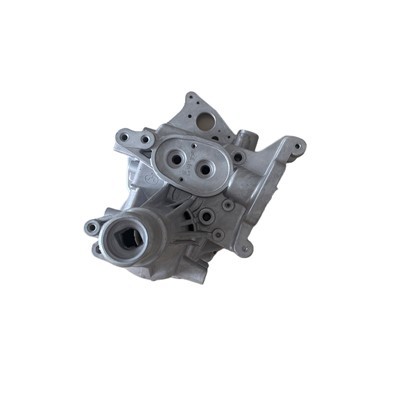
Hot tears, also known as hot cracking, are a common and serious defect in aluminum die – casting parts. As a supplier of aluminum die – casting parts, it’s crucial for me to understand what hot tears are, their causes, and how to avoid them. This knowledge not only helps in maintaining high – quality product standards but also in providing excellent advice to customers. Aluminum Die Casting Partsr
What are Hot Tears?
Hot tears are cracks that form during the solidification process of the aluminum alloy in the die – casting mold. They usually appear on the surface or inside of the castings when the metal is in a semi – solid state. At this stage, the alloy has lost its fluidity but has not yet fully solidified and developed sufficient strength. The cracks are often irregular in shape and can vary in size from very fine hairline fractures to more prominent splits.
The formation of hot tears is mainly due to the mechanical stress and thermal stress generated during the solidification of the aluminum alloy. When the alloy cools and solidifies, it undergoes volume shrinkage. If the shrinkage is restricted by the mold, the casting will experience internal stress. When this stress exceeds the strength of the semi – solid metal, hot tears occur.
Causes of Hot Tears in Aluminum Die – Casting Parts
1. Alloy Composition
Different aluminum alloys have different solidification characteristics. Some alloys with a wide solidification range are more prone to hot tearing. For example, aluminum alloys containing a high percentage of certain elements like copper or magnesium may have a broader temperature range during which the alloy exists in a semi – solid state. This extended semi – solid phase allows for more significant volume changes and increases the likelihood of hot crack formation.
2. Mold Design
Improper mold design is a major culprit in hot tear development. A mold with sharp corners or sudden changes in cross – section can cause non – uniform cooling and solidification of the aluminum alloy. The areas near sharp corners cool faster than the surrounding regions, resulting in uneven shrinkage. This uneven shrinkage creates stress concentrations that can lead to hot tears. Additionally, a mold that does not provide sufficient draft angles can restrict the free movement of the casting during solidification, increasing the internal stress and the risk of cracking.
3. Pouring Parameters
The pouring temperature and speed also play a vital role in hot tear formation. If the pouring temperature is too high, the alloy will take longer to solidify, which increases the time during which the casting is in a semi – solid and vulnerable state. On the other hand, if the pouring speed is too fast, it can cause turbulence in the molten metal, leading to the entrapment of air and uneven filling of the mold. This can also contribute to non – uniform solidification and hot tear generation.
4. Cooling Rate
An inconsistent cooling rate across the casting is a significant factor in hot tear formation. If some parts of the casting cool much faster than others, it creates thermal stress. For example, in a complex – shaped die – casting, areas in contact with cooling channels in the mold may cool rapidly, while remote areas cool slowly. This temperature difference during solidification can generate stress levels high enough to cause hot tears.
How to Avoid Hot Tears in Aluminum Die – Casting Parts
1. Optimize Alloy Selection
As a supplier, we carefully select the appropriate aluminum alloy based on the specific requirements of the die – casting part. We consider alloys with a narrow solidification range, as they are less prone to hot tearing. For instance, some modified aluminum – silicon alloys can offer better resistance to hot cracking due to their relatively narrow solid – liquid phase transition temperature range. We also work closely with alloy manufacturers to ensure the chemical composition of the alloy is precise, as even small variations in element content can affect the alloy’s solidification behavior.
2. Improve Mold Design
In terms of mold design, we follow several best practices to minimize hot tears. First, we ensure that all corners in the mold are rounded instead of sharp. Rounded corners promote more uniform cooling and reduce stress concentrations. We also optimize the cross – section changes in the mold design to be gradual, allowing for a smoother flow of the molten metal and more even solidification.
Secondly, we pay attention to draft angles. Adequate draft angles in the mold enable the casting to shrink and move freely during the solidification process, reducing the internal stress caused by mold restraint. We use advanced computer – aided design (CAD) and computer – aided engineering (CAE) software to simulate the die – casting process. These simulations help us predict potential hot tear locations and adjust the mold design accordingly.
3. Control Pouring Parameters
Proper control of pouring parameters is essential. We carefully monitor and adjust the pouring temperature to an optimal level. Based on the type of aluminum alloy and the shape of the die – casting, we determine the appropriate pouring temperature range. This usually involves thermocouples and temperature sensors in the melting furnace and pouring system.
We also regulate the pouring speed to ensure a smooth and laminar flow of the molten metal into the mold. By using advanced pouring equipment, we can maintain a consistent pouring speed, which helps in achieving uniform filling of the mold cavity and reducing the likelihood of non – uniform solidification.
4. Manage Cooling Rate
To manage the cooling rate effectively, we use a combination of techniques. We design the cooling channels in the mold in such a way that they promote uniform cooling across the casting. This may involve adjusting the size, shape, and placement of the cooling channels. In some cases, we also use chilling pads or cooling aids in specific areas of the mold to control the cooling rate precisely.
We also implement a real – time monitoring system for the cooling process. Temperature sensors are placed at key locations in the mold, and the data is continuously analyzed. If any significant temperature differences are detected, we can make immediate adjustments to the cooling system, such as adjusting the flow rate of the cooling water.
Quality Control and Assurance in Avoiding Hot Tears
As a reliable supplier of aluminum die – casting parts, we have a comprehensive quality control system in place to prevent hot tears. We conduct strict incoming inspections on the raw materials, including chemical analysis of the aluminum alloys to ensure their composition meets the required standards.
During the die – casting process, we use in – process inspections. Non – destructive testing (NDT) methods such as ultrasonic testing and radiographic testing are employed to detect any potential cracks or defects at an early stage. Once the die – cast parts are completed, we carry out a final inspection. Visual inspection is done to check for surface cracks, and also mechanical testing may be performed to assess the integrity and quality of the parts.
Conclusion
Hot tears are a challenging defect in aluminum die – casting, but with a thorough understanding of their causes and the implementation of appropriate preventive measures, we can significantly reduce their occurrence. As a supplier of aluminum die – casting parts, we are dedicated to providing high – quality products to our customers. Our expertise in alloy selection, mold design, pouring parameter control, and cooling management all contribute to the production of defect – free die – cast parts.
Die Casting Parts If you are in need of high – quality aluminum die – casting parts or have any questions about avoiding hot tears in the die – casting process, we invite you to contact us for further discussions and potential procurement. Our team of experts is ready to provide you with the best solutions tailored to your specific needs.
References
- Campbell, J. (2003). Casting. Butterworth – Heinemann.
- Newell, V. (2011). Aluminum Die Casting Handbook. The Aluminum Association.
- Flemings, M. C. (1974). Solidification Processing. McGraw – Hill.
Suzhou Ruide Die-Casting Mold Co., Ltd.
Address: No.2, Wanchen Road, Huayang Village, Wangting Town, Xiangcheng District, Suzhou City, Jiangsu Province
E-mail: jada@cnrdmj.com.cn
WebSite: https://www.cnrdmold.com/
