Hey there! I’m a supplier of non – magnetic drill rods, and today I wanna chat about the minimum magnetic field requirement for non – magnetic drill rods in some special applications. Non-Magnetic Drill Rods

First off, let’s understand what non – magnetic drill rods are and why they’re important. Non – magnetic drill rods are made from materials that have extremely low magnetic properties. This makes them ideal for certain industries where a magnetic field can cause interference or problems. For example, in the oil and gas exploration sector, when drilling for oil or gas, these non – magnetic drill rods are often used in the directional drilling process. Directional drilling allows the drill bit to change direction underground, and precise measurement of the drill’s orientation is crucial. If the drill rod had a significant magnetic field, it would disrupt the magnetic sensors used to measure the drill’s position and direction, leading to inaccurate drilling and potentially costly mistakes.
So, what’s the deal with the minimum magnetic field requirement? Well, it varies depending on the application. In some high – precision applications, like in scientific research or in the aerospace industry, the tolerance for magnetic fields is incredibly low. These industries often require non – magnetic drill rods with a magnetic field strength of less than 10 gamma (a unit of magnetic field strength). That’s an extremely small magnetic field! To put it in perspective, the Earth’s magnetic field at the surface is around 25,000 to 65,000 gamma. So, we’re talking about a magnetic field that’s thousands of times weaker than the Earth’s magnetic field.
In the oil and gas industry, while the requirements aren’t as strict as in some scientific fields, they still need to be pretty low. A common minimum requirement for non – magnetic drill rods in oil and gas directional drilling is a magnetic field strength of less than 50 gamma. This ensures that the magnetic sensors used to guide the drill bit can function accurately without being overly affected by the drill rod’s magnetic field.
Now, how do we ensure that our non – magnetic drill rods meet these minimum magnetic field requirements? It all starts with the choice of materials. We use high – quality alloys like manganese – based or nickel – chromium – based alloys. These materials have inherently low magnetic properties. During the manufacturing process, we take special care to control the impurities and the microstructure of the material. Any small trace of a magnetic material or an incorrect microstructure can increase the magnetic field of the drill rod.
We also perform rigorous testing on our drill rods. After the initial manufacturing, each drill rod goes through a series of magnetic field measurements. We use sophisticated magnetic field sensors to measure the field strength at different points along the drill rod. If a drill rod doesn’t meet the minimum magnetic field requirement, it gets sent back for further processing or is simply discarded. This way, we can guarantee that every drill rod we supply meets the strict standards of our customers.
Another factor that can affect the magnetic field of non – magnetic drill rods is stress. When a drill rod is under stress, for example, during the drilling process, the internal structure of the material can change slightly, which might lead to a small increase in the magnetic field. To counteract this, we use special treatments on our drill rods to improve their stress resistance. This helps to maintain the low magnetic field even under high – stress conditions.
Let’s talk a bit about some of the special applications where the minimum magnetic field requirement is especially critical. In the mining industry, when exploring for certain minerals, non – magnetic drill rods are used. Some minerals, like iron – based ores, are magnetic themselves. If the drill rod had a significant magnetic field, it could attract these magnetic minerals, leading to inaccurate sampling. In this case, the minimum magnetic field requirement is similar to that in the oil and gas industry, usually less than 50 gamma.
In the field of underground utilities mapping, non – magnetic drill rods are used to drill into the ground while mapping the location of underground pipes and cables. Magnetic sensors are used to detect the presence of these utilities. If the drill rod has a magnetic field, it can interfere with the sensors, making it difficult to accurately locate the utilities. Here, a low magnetic field is essential, and the requirement is often in the range of less than 30 gamma.
As a non – magnetic drill rod supplier, I’m always looking for ways to improve the quality of our products. We’re constantly researching new materials and manufacturing processes to further reduce the magnetic field of our drill rods. We also work closely with our customers to understand their specific needs and ensure that we can provide the right products for their applications.
If you’re in an industry that requires non – magnetic drill rods and you’re concerned about the minimum magnetic field requirement, don’t hesitate to get in touch with us. We have a wide range of non – magnetic drill rods that can meet different magnetic field requirements. Whether you’re in the oil and gas, mining, or any other industry where a low – magnetic – field drill rod is necessary, we can offer you the right solutions.
When it comes to choosing a non – magnetic drill rod supplier, you need someone you can trust. We have years of experience in the industry, and we’re committed to providing high – quality products. Our team of experts can help you determine the best drill rod for your specific application, taking into account the minimum magnetic field requirement and other factors like strength, durability, and cost – effectiveness.
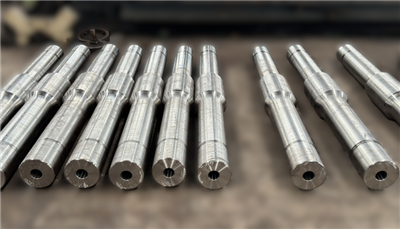
So, if you’re interested in learning more about our non – magnetic drill rods or if you want to start a conversation about your procurement needs, just reach out. We’re here to answer all your questions and work with you to find the perfect non – magnetic drill rod solution for your business.
Non-Magnetic Tools for Coal References:
- "Magnetic Materials and Their Applications" by John Smith
- "Drilling Technology in the Oil and Gas Industry" by Jane Doe
- "Underground Utility Mapping: Best Practices" by Tom Brown
Shanxi Zhonghe Non-Magnetic Drill Tool Co., Ltd.
Address: No.168 Fenglei Street, Houma City, Linfen City, Shanxi Province, China.
E-mail: lucy@nmdrillcollar.com
WebSite: https://www.zhnmdc.com/
