Hey there! As a Membrane Cassettes supplier, I often get asked about the differences between flat – sheet and hollow – fiber membrane cassettes. So, I thought I’d break it down for you in a simple and easy – to – understand way. Membrane Cassettes
Structure and Basics
Let’s start with the structure. Flat – sheet membrane cassettes are, well, just as the name suggests. They consist of flat sheets of membrane material that are stacked or arranged in a way that allows for fluid flow. The membranes are usually held in place by frames or spacers. These cassettes are like little sandwiches, with the membrane being the filling, and the frames providing the structure.
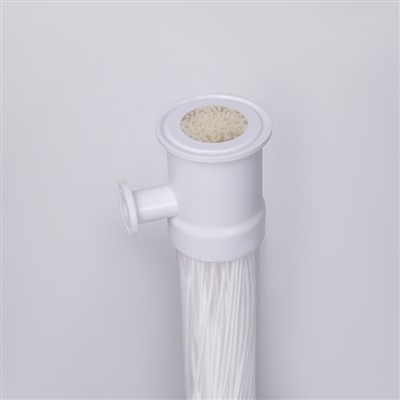
On the other hand, hollow – fiber membrane cassettes are made up of a bundle of tiny, hollow fibers. Picture a bunch of straws packed tightly together. These fibers are the membranes themselves, and they’re designed to let fluids pass through their walls while retaining certain substances.
How They Work
When it comes to how they work, the differences become even more apparent. In flat – sheet membrane cassettes, the fluid flows across the surface of the flat membranes. This is called cross – flow filtration. The fluid moves parallel to the membrane, which helps to prevent the build – up of particles on the membrane surface. As the fluid flows, the smaller molecules and solvents pass through the membrane, while the larger molecules and particles are retained on the other side.
For hollow – fiber membrane cassettes, there are two main ways of operation. One is called inside – out flow, where the fluid is pumped into the inside of the hollow fibers. The smaller molecules and solvents then pass through the fiber walls, and are collected on the outside. The other way is outside – in flow, where the fluid starts on the outside of the fibers and is forced through the walls into the inside of the fibers.
In terms of separation efficiency, hollow – fiber membranes often have a greater surface area per unit volume compared to flat – sheet membranes. This means that they can handle more fluid and perform more separations in a smaller space. It’s like having a big sponge (hollow – fiber membranes) compared to a flat piece of cloth (flat – sheet membranes) to soak up water.
Applications
Now, let’s talk about the applications. Flat – sheet membrane cassettes are commonly used in applications where the feed solution is relatively clean and doesn’t contain a lot of large particles. They’re great for applications like laboratory research, where you need precise control over the filtration process. For example, in cell culture media filtration, flat – sheet membranes can be used to remove any contaminants while maintaining the integrity of the cells.
Hollow – fiber membrane cassettes, on the other hand, are more suitable for applications where the feed solution is dirty or has a high concentration of solids. They’re often used in wastewater treatment plants, where they can handle the large volumes of water and the high levels of suspended solids. They’re also used in the food and beverage industry, for things like juice clarification. The high surface area and the ability to handle high – solid – content solutions make them a great choice for these types of applications.
Pros and Cons
Let’s start with the pros and cons of flat – sheet membrane cassettes. One of the biggest advantages is that they’re easy to clean and maintain. You can easily access the flat membranes and perform cleaning procedures without too much hassle. They also provide a more uniform flow of fluid across the membrane surface, which can lead to more consistent filtration results.
However, flat – sheet membrane cassettes have some drawbacks. They have a relatively low surface area per unit volume, which means that you may need a larger cassette to achieve the same filtration capacity as a hollow – fiber cassette. They’re also more prone to fouling if the feed solution contains a lot of particles, because the cross – flow may not be enough to prevent all the particles from sticking to the membrane surface.
Now, let’s look at the hollow – fiber membrane cassettes. As I mentioned earlier, their high surface area per unit volume is a huge advantage. This allows for high – throughput filtration, which means you can process a large amount of fluid in a short amount of time. They’re also more resistant to fouling, because the flow pattern inside the fibers can help to remove the particles from the membrane surface.
But hollow – fiber membrane cassettes also have some limitations. They can be more difficult to clean compared to flat – sheet cassettes, especially if the fouling occurs inside the fibers. The fibers are so small that it can be tricky to get the cleaning solution to reach all the parts of the membrane. Also, they may be more expensive to manufacture, which can be a factor when considering the cost – effectiveness of a filtration system.
Maintenance and Lifespan
Maintenance is an important aspect to consider when choosing between flat – sheet and hollow – fiber membrane cassettes. For flat – sheet cassettes, as I said, they’re relatively easy to clean. You can usually disassemble the cassette and clean the individual flat membranes using chemicals or physical methods like backwashing. The lifespan of a flat – sheet cassette can vary depending on the application and the operating conditions, but with proper maintenance, they can last for a reasonable amount of time.
For hollow – fiber membrane cassettes, maintenance can be a bit more challenging. If the fouling is mild, you can try to clean the fibers using chemical cleaning agents. But if the fouling is severe, you may need to replace the entire cassette. The lifespan of a hollow – fiber cassette can also vary, but in applications with harsh feed solutions, they may need to be replaced more frequently compared to flat – sheet cassettes.
Cost Considerations
When it comes to cost, both the initial purchase price and the long – term operating costs matter. Flat – sheet membrane cassettes are generally less expensive to purchase compared to hollow – fiber cassettes. However, if you need a large – scale filtration system with high throughput, you may end up needing more flat – sheet cassettes to achieve the same capacity as a smaller number of hollow – fiber cassettes. This can increase the overall cost.
In terms of long – term operating costs, flat – sheet cassettes may require less energy for the cross – flow operation. But hollow – fiber cassettes can process more fluid in a smaller space, which can save on the cost of equipment and installation. The cost of replacement membranes also needs to be considered. As I mentioned earlier, hollow – fiber membranes may need to be replaced more frequently in some applications, which can add to the overall cost.
Conclusion

So, to sum it up, flat – sheet and hollow – fiber membrane cassettes are two different types of filtration tools, each with its own unique features, advantages, and disadvantages. Flat – sheet cassettes are great for clean feed solutions and applications that require precise control, while hollow – fiber cassettes are better suited for dirty feed solutions and high – throughput applications.
Final Fill If you’re in the market for membrane cassettes, whether it’s flat – sheet or hollow – fiber, I’d love to have a chat with you. We can discuss your specific needs, the best type of cassette for your application, and how we can provide you with high – quality solutions. Don’t hesitate to reach out and let’s start a conversation about how we can meet your filtration needs.
References
- Cheryan, M. (1998). Ultrafiltration and Microfiltration Handbook. Technomic Publishing Company.
- Belfort, G., Davis, R. H., & Zydney, A. L. (1994). The behavior of suspensions and macromolecular solutions in crossflow microfiltration. Journal of Membrane Science, 96(1 – 2), 1 – 58.
Hangzhou Guidling Technology Co., Ltd.
As one of the leading membrane cassettes manufacturers and suppliers in China, we also support customized service. We warmly welcome you to wholesale high quality membrane cassettes in stock here from our factory. For quotation, contact us now.
Address: No.795, 18th Street, Qiantang New District, Hangzhou City, Zhejiang Province, China
E-mail: export1@guidling.net
WebSite: https://www.guidlingfiltration.com/
