Hey there! I’m a supplier of flange bolting Belleville washers, and I’ve seen firsthand how these little guys can make a big difference in your projects. In this blog, I’m gonna share some tips on how to optimize the use of Belleville washers in flange bolting. Flange Bolting Belleville Washer

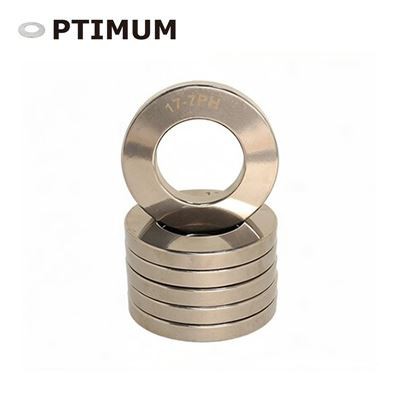
First off, let’s talk about what Belleville washers are. They’re these conical-shaped washers that are designed to provide a high spring rate in a small space. When you stack them up, they can create a lot of force, which is great for keeping bolts tight in flange connections.
One of the key things to keep in mind when using Belleville washers in flange bolting is the preload. Preload is the amount of force that you apply to the bolt before the joint is put under load. It’s important to get the preload right because if it’s too low, the bolts might come loose over time, and if it’s too high, you could damage the washers or the bolts themselves.
To determine the right preload for your application, you need to consider a few factors. The first is the size and type of the bolts. Different bolts have different strength ratings, and you need to make sure that the preload you apply is within the recommended range for the bolts you’re using. You can usually find this information in the bolt manufacturer’s specifications.
Another factor to consider is the material of the flange and the washers. Different materials have different coefficients of friction, which can affect the amount of preload that you need to apply. For example, if you’re using a flange made of a soft material like aluminum, you might need to apply a lower preload than if you’re using a flange made of a harder material like steel.
Once you’ve determined the right preload for your application, the next step is to install the Belleville washers correctly. The washers should be stacked in the right order, with the convex side facing the bolt head or nut. This ensures that the washers will compress evenly and provide the maximum amount of force.
It’s also important to make sure that the washers are clean and free of any debris before you install them. Any dirt or grime on the washers can affect their performance and reduce the amount of preload that they can provide.
When you’re tightening the bolts, it’s a good idea to use a torque wrench to ensure that you’re applying the right amount of force. You should also tighten the bolts in a crisscross pattern to ensure that the flange is evenly compressed.
Another thing to keep in mind is the temperature of the environment. Belleville washers can be affected by temperature changes, and if the temperature gets too high or too low, it can affect their performance. If you’re using the washers in a high-temperature environment, you might need to use a special type of washer that’s designed to withstand the heat.
In addition to optimizing the use of Belleville washers in flange bolting, it’s also important to perform regular maintenance on the joints. This includes checking the bolts for tightness and inspecting the washers for any signs of wear or damage. If you notice any problems, you should replace the washers or the bolts as soon as possible.
Now, let’s talk about some of the benefits of using Belleville washers in flange bolting. One of the main benefits is that they can help to prevent bolt loosening. When a joint is put under load, the bolts can start to vibrate, which can cause them to loosen over time. Belleville washers can help to absorb these vibrations and keep the bolts tight.
Another benefit is that they can provide a more consistent preload. When you use traditional flat washers, the preload can vary depending on the surface finish of the flange and the bolt head. Belleville washers, on the other hand, are designed to provide a more consistent preload, which can help to ensure that the joint is properly tightened.
Finally, Belleville washers can be used in a variety of applications. They’re commonly used in the oil and gas industry, as well as in the automotive and aerospace industries. They’re also used in a lot of industrial applications, such as in machinery and equipment.
So, there you have it! Those are some tips on how to optimize the use of Belleville washers in flange bolting. If you’re in the market for flange bolting Belleville washers, I’d love to chat with you. We’ve got a wide range of washers to choose from, and we can help you find the right ones for your application. Just reach out to us, and we’ll be happy to assist you.
Ball Bearing Disc Spring References:
- Machinery’s Handbook
- Bolt manufacturers’ specifications
Yangzhou Optimum Spring Manufacturing Co., Ltd.
As one of the most professional flange bolting belleville washer manufacturers and suppliers in China, we’re featured by quality products and good service. Please rest assured to buy customized flange bolting belleville washer made in China here from our factory. For more information, contact us now.
Address: No.9 West of Shuangtang Rd, Yangzhou, P.R. China 225000
E-mail: susie@optimum-spring.com
WebSite: https://www.optimum-spring.com/
