If you’re reading this, you’re probably either a dentist hunting for reliable fixed prostheses supplies, a lab tech tired of dealing with subpar crowns that chip mid-adjustment, or maybe just someone curious about what actually goes on behind the scenes when you get a fixed bridge or crown. I’ve been in this game for 12 years—running a small fixed prostheses supply business that works with clinics and labs across the country—and let me tell you, the biggest question I get from my clients isn’t “Can you make this gold crown match my patient’s tooth color?” It’s “What the hell are the actual risks here? Because I don’t want my patient coming back in 6 months with a broken bridge or an infection that’s all my fault.” Fixed Prostheses
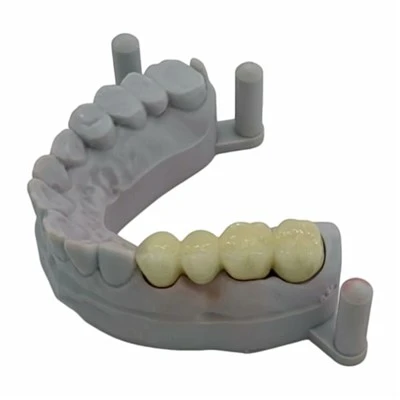
Fair question. A lot of resources out there paint fixed prostheses—think crowns, bridges, inlays, onlays, the stuff that’s cemented permanently to your teeth—as like, no-brainer, low-risk stuff. But that’s not the whole truth. I’ve seen it all: patients with crowns that feel like they’re floating because the fit was off, bridges that chip when someone takes a bite of an apple, even infections that pop up under a well-meaning crown that no one saw coming. And yeah, some of that falls on the dentist or the lab, but a lot of it ties back to the materials or the design of the fixed prostheses themselves. Let’s break this down like we’re sitting at a lab bench, not a textbook. No jargon that’ll make your eyes cross.
First up, let’s talk about material mismatches. This is one of the most common, and most preventable, risks that I see. Fixed prostheses are made of different stuff: porcelain, metal alloys, zirconia, maybe even gold. Each has its own quirks, and if you mix them wrong, bad things happen. For example, a lot of clinics love zirconia these days—it’s strong, looks natural, great for back molars where you chew hard. But if you put a porcelain-fused-to-zirconia crown on a front tooth, and the porcelain layer is too thin or fused poorly, that porcelain chips. I’ve had a dentist send me an email last year saying his patient’s new front crown broke at the coffee shop, like 3 days after it went in. Turned out the lab they were using cut the porcelain too thin to save time, and also didn’t account for how zirconia’s slight expansion and contraction when it’s in the mouth would mess with the porcelain bond.
Then there’s metal allergy. I can’t tell you how many times I’ve had a client come to me panicking because their patient developed a rash or gum irritation after getting a metal-based crown. A lot of cheap fixed prostheses use alloys with nickel, cobalt, or even chromium—stuff that’s super common allergens. I once heard of a patient who had a crown made with a random metal alloy from a no-name supplier, and they ended up with a metallic taste in their mouth that lasted 6 months, plus gum inflammation that wouldn’t go away until the crown was replaced. The worst part? A lot of these cheap suppliers cut corners on material testing. We test every single batch of metal we use for nickel leach rate, because even a small amount over the threshold can cause a reaction. That’s not optional, but a lot of places skip it to save a few bucks.
Next, fit and marginal integrity. Marginal integrity is just a fancy way of saying “how well the edge of the crown or bridge fits against your natural tooth.” If there’s even a tiny gap—like, less than a grain of sand—food particles and bacteria get stuck there. Over time, that leads to tooth decay under the crown, which is called secondary caries. And once that happens, you can’t just fill it—you have to pull the whole crown or bridge off, fix the decay, and put a new one on. I once worked with a lab that was cranking out crowns at like 5 a day, no time to check the fit, and a dentist sent back 7 crowns in one month because all of them had gaps bigger than they should have been. The problem? They were using old scanning software that didn’t pick up tiny irregularities in the tooth prep. We upgraded our scanning equipment a few years back, and our marginal gap rate dropped by like 80%. Fit isn’t just about how it feels when you bite—it’s about preventing decay that’ll make your patient hate you (and your supplier) later.
Wait, also, occlusal adjustment. That’s the process of making sure your new fixed prosthesis aligns with how you bite. If a crown is too high, when the patient clamps down, that pressure is all on that one tooth. Over time, that can cause pain, even fracture of the natural tooth or the crown. I’ve seen a case where a patient had a new molar crown that was 0.2mm too high, and they started having headaches because they were clenching that side of their jaw 24/7 to adjust. The dentist ended up having to grind the crown down, but once they did, the headache went away. The issue here is that a lot of labs don’t do full bite analysis—they just make the crown based on the impression, and leave the adjustment to the dentist. But if the lab gets the bite wrong at the design stage, the dentist can only do so much. We always include a digital bite analysis with every fixed prosthesis we make, so the dentist doesn’t have to play guesswork with how it fits.
Then there’s something called biocompatibility, which is different from allergy. Wait, let’s clarify that—allergy is an immune reaction to a specific metal or material, but biocompatibility is how the material interacts with your gum tissue and the surrounding teeth. For example, some porcelain materials are super porous, so they absorb bacteria and plaque. That leads to gum recession around the crown, which makes the gap between the crown and natural tooth bigger, and guess what? More decay. I had a patient a few years back who had a fixed bridge made with a cheap porous porcelain, and within a year, his gums started pulling away from the bridge. We tested the porcelain, and it had a porosity rate 3 times the industry standard. No one told the dentist that would happen—he just got a cheap quote on the bridge. That’s the risk of going with a supplier that doesn’t care about material quality, not just price.
Wait, and what about long-term risks? I hear people say fixed prostheses last 10-15 years, but that’s only if they’re made right. I’ve seen crowns fall off after 2 years because the cement was wrong, or the prep was bad. Or bridges where the pontic (the fake tooth in the middle) doesn’t clean well, so the gums under it get infected. That’s called periodontal inflammation, and it’s super common. The pontic needs to be shaped in a way that lets the patient floss under it, but a lot of labs cut corners on that shape to make it look better. I remember a bridge we made last year for a patient with a missing front tooth—we shaped the pontic to have a little indent so floss can slide under it, and the dentist emailed us a month later saying the patient’s gum health was better than it’s been in years. That’s the stuff that most suppliers don’t think about—how the prosthesis affects long-term gum health, not just how it looks.
Also, let’s talk about the hidden risks from the supply side. Wait, as a supplier, I see a lot of issues that dentists don’t even know are coming from the material. For example, zirconia that’s not sintered properly. Sintering is the process where you heat the zirconia to make it hard. If you don’t heat it long enough, the zirconia is brittle, so it can chip or fracture when the patient chews. I once had a lab send us a batch of zirconia crowns where 3 out of 5 fractured during adjustment—turns out the supplier they were buying from skipped the final sintering step to save time. That’s a disaster waiting to happen. The crown would have broken in the patient’s mouth, which would be an emergency for the dentist, and a bad experience for the patient.
Another thing: cement selection. A lot of people forget that the cement holding the fixed prosthesis on is part of the equation. If you use a temporary cement instead of permanent, the crown will fall off in a week. But even permanent cement can cause issues if it’s too soft, or if there’s excess cement left over. Excess cement is probably the most underrated risk here. If you leave cement around the gum line, it gets into the tissue, causes inflammation, and can lead to infection that requires the crown to be removed. We always include a guide with every set of crowns we make that tells the dentist which cement we recommend, and how to check for excess cement. But I know a lot of small labs don’t do that, so the dentist is on their own.
Wait, let’s get real for a second. A lot of dentists are under pressure to cut costs, especially these days, so they go with the cheapest fixed prostheses supplier they can find. But what’s the actual cost of that? A patient comes back with a broken crown or an infection, you have to fix it, maybe even deal with a malpractice claim, and your reputation takes a hit. I’ve had clients tell me they switched to our business after losing 2 or 3 patients because the cheap supplier’s crowns kept failing. That’s the real risk of ignoring these little details that most blogs or textbooks don’t talk about.
So, what’s the takeaway here? Fixed prostheses aren’t risk-free, but most of the risks are preventable. It comes down to working with a supplier that cares about material testing, fit, marginal integrity, and long-term biocompatibility—not just cranking out cheap parts. For us, that means testing every material batch, using the latest scanning and sintering equipment, and working closely with dentists and labs to make sure every crown, bridge, or inlay is customized to the patient’s mouth, not just a one-size-fits-all.

If you’re a dentist, lab tech, or clinic owner who’s tired of dealing with fixed prostheses that break, don’t fit right, or cause patient issues, let’s talk. We can go over your specific needs, answer any questions about our processes, and make sure you get prostheses that are safe, reliable, and last. No hard sells, no weird fine print—just solid quality that both you and your patients can trust.
Dental Implants References:
- American Dental Association. (2022). Fixed Dental Prostheses: Clinical Guidelines for Material Selection and Fit Integrity.
- Journal of Prosthetic Dentistry. (2021). Marginal Gap Size and Secondary Caries Risk in Fixed Crowns: A Systematic Review.
- World Health Organization. (2020). Biocompatibility of Dental Materials: Risk Mitigation for Oral Health Providers.
- International Organization for Standardization. (2019). ISO 10993-15: Biological Evaluation of Medical Devices—Identification and Quantification of Metal Ions from Dental Implants and Prostheses.
Shenzhen Tuomei Dental Technology Co., Ltd.
We are one of the most professional fixed prostheses manufacturers and suppliers in China, featured by quality products and low price. Please rest assured to buy discount fixed prostheses made in China here from our factory. Welcome to view our website for more information.
Address: Room 301, Building C Fuhe Industrial Park No.18 Hexiu West Road, Zhancheng Community Fuhai Subdistrict, Bao’an District, Shenzhen, Guangdong, China
E-mail: dentallab.works@gmail.com
WebSite: https://www.sztuomeidentallab.com/
