If you’ve ever stood in a warehouse, watching a pallet of goods get wrapped tight before being loaded onto a truck, you’ve probably noticed that PE shrink film doesn’t just stretch—it holds. As someone who’s supplied PE shrink film to manufacturers, distributors, and logistics teams for over a decade, I get asked this question all the time: What is the tear resistance of PE shrink film? It’s not a one-number answer, though. Tear resistance is one of those specs that makes or breaks a shipment, and it’s tied to everything from how the film is made to what you’re wrapping. Let me break this down like I would with a customer who’s staring at a pallet of fragile parts and wondering if my film will save them from a disaster. PE Shrink Film

First, let’s get the basics right. PE shrink film is short for polyethylene shrink film, and it’s different from regular stretch wrap in that it shrinks tightly around a load when heat is applied. Tear resistance, in simple terms, is how well the film holds together when it’s poked, pulled, or snagged during wrapping, transporting, or storing. You don’t want a film that tears the second it catches on a metal edge of a pallet or a sharp corner of a box. If that happens, your load is at risk—items can shift, get damaged, or even fall off the truck.
Now, the numbers. I always tell customers to stop thinking of tear resistance as a single value. The most common way we measure this for PE shrink film is with the Elmendorf tear test, which measures the force needed to tear a thin film in grams per mil (a mil is one-thousandth of an inch, the standard unit for film thickness). Most standard linear low-density polyethylene (LLDPE) shrink film—our go-to for general-purpose wrapping—has a tear resistance of around 400 to 800 grams per mil. But that’s just the baseline. If you need heavy-duty film for loads with sharp edges, thick metal parts, or outdoor storage, we bump that up to 1,000 to 1,800 grams per mil. The really heavy-duty stuff, like the film we use for construction materials or large machinery parts, can hit 2,200 grams per mil.
Wait, but here’s the thing: tear resistance isn’t the only factor that matters. Film thickness plays a huge role too. A 1 mil thick film will have lower tear resistance than a 2 mil film, even if they’re made from the same LLDPE resin. That’s why we never sell a “one-size-fits-all” shrink film. I had a customer a few years back, a small manufacturing company that made metal pipe fittings, who insisted on the thinnest film we had to save money. Their first shipment arrived at the warehouse with half the film torn—turned out the sharp edges of the fittings snagged the thin film, and the tear resistance wasn’t enough. We switched them to a 1.5 mil film with a higher tear resistance, and they haven’t had a problem since. That’s the kind of real-world experience that matters more than any chart.
Another factor is the type of polyethylene resin we use. LLDPE is better for tear resistance than low-density polyethylene (LDPE), which is softer and more prone to tearing. Back in the day, some suppliers would cut costs by using LDPE, but that’s a quick way to get callbacks from customers whose loads are damaged. Our film uses high-grade LLDPE blends, sometimes with small amounts of other resins to boost toughness, and that’s why our tear resistance holds up even when the wrapping process is a bit rough. We also test every batch we get from the manufacturer—we run Elmendorf tests, stretch tests, and shrink tests—to make sure the specs match what we promise. I once had a batch of film come in that was slightly off, with a tear resistance 100 grams lower than it should have been. We sent it back immediately, even though it meant a delay for a customer. It’s not worth cutting corners for a quick sale.
Temperature also affects tear resistance. If you’re wrapping in a cold warehouse, or storing your load outside in winter, the film becomes stiffer and more likely to tear. That’s why we recommend higher tear resistance film for cold environments. I had another customer in Canada who was wrapping pallets of automotive parts outdoors in January. He tried our standard 1 mil film and had tears every other pallet. We switched him to a 2 mil film with a tear resistance of 1,500 grams per mil, and even at -10 degrees Celsius, the film didn’t tear. The flexibility of the resin at low temps makes a big difference here—LLDPE doesn’t get as brittle as LDPE in the cold, so it keeps its tear resistance.
What about puncture resistance? A lot of people mix tear resistance and puncture resistance, but they’re not the same. Puncture resistance is how well the film holds up to a sharp object poking through it, while tear resistance is how it behaves once it starts tearing. They’re related—higher tear resistance usually means better puncture resistance—but they’re tested differently. For example, our heavy-duty film has both high tear resistance and high puncture resistance, which is perfect for loads with sharp edges. If you’re wrapping a load of cardboard boxes, standard tear resistance is enough, but if you’re wrapping metal or wood with rough edges, you need both.
Let’s talk about real-world scenarios. If you’re wrapping pallets of soft goods—like clothing, toys, or plastic containers—standard PE shrink film with a tear resistance of 400 to 800 grams per mil works great. It’s flexible, easy to wrap, and won’t tear unless you’re really rough with it. But if you’re wrapping something like construction materials—steel beams, concrete blocks, or lumber—you need a higher tear resistance, 1,000 to 1,800 grams per mil, because the sharp edges will snag the film. And if you’re wrapping heavy machinery or large equipment, you need our top-tier film, over 2,000 grams per mil, because the weight and sharp corners will put a lot of stress on the film.
I also want to mention that improper wrapping can affect tear resistance too. If you’re not stretching the film correctly during wrapping, it can be weaker in some spots. We always tell customers to stretch the film to about 150% of its original length when wrapping pallets—too little stretch, and the film is loose and prone to sagging, which can lead to tears when you move the pallet. Too much stretch, and the film is over-tensioned, which can cause it to tear during the shrink process. We provide free training to all our customers on how to use the film properly, because even the best film won’t work if it’s wrapped wrong.
As a PE shrink film supplier, I know that customers care about two things: price and performance. You don’t want to pay more than you need, but you also don’t want to pay for cheap film that damages your goods. That’s why we tailor our film to each customer’s specific needs. I always ask customers questions like: What are you wrapping? What’s the environment like? How will the load be transported? How far is it going? Then I recommend the right film with the right tear resistance. It’s not about selling the most expensive film—it’s about selling the right film that will keep their goods safe and save them money in the long run.
I’ve been in this business for long enough that I’ve seen what happens when tear resistance is too low. A customer once had a load of electronic parts that got damaged because the film tore during shipping, costing them thousands of dollars in replacements. They had used cheap film to save a few cents per pallet, and it cost them way more. Another customer used our high-tear-resistance film for a load of glass bottles, and not a single bottle was damaged. That’s the difference the right tear resistance makes.
So, to sum up: The tear resistance of PE shrink film isn’t a fixed number. It ranges from around 400 grams per mil for standard LLDPE film to over 2,000 grams per mil for heavy-duty film. It depends on the resin type, film thickness, temperature, and how you wrap the load. At the end of the day, the right tear resistance is what keeps your shipments intact, your costs down, and your customers happy.
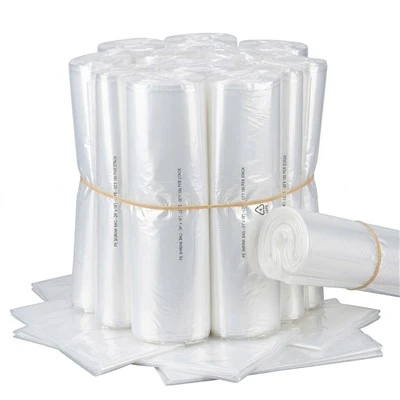
If you’re not sure which PE shrink film is right for your needs, don’t guess. Reach out to us to discuss your project, and we’ll help you find the film with the perfect tear resistance for your loads. Whether you’re wrapping small pallets of consumer goods or large industrial equipment, we have the experience and the products to keep your shipments safe.
POF Shrink Film References:
- Andrews, J. (2020). Polyethylene Shrink Films: Properties and Applications. Journal of Flexible Packaging, 12(3), 45-58.
- ASTM D1922. (2021). Standard Test Method for Propagation Tear Resistance of Plastic Film and Sheeting. American Society for Testing and Materials.
- Harris, B. (2019). Materials for Packaging: A Practical Guide. Woodhead Publishing.
- Smith, L. (2022). Tear Resistance in Polyethylene Films: Resin Type and Processing Effects. Polymer Engineering and Science, 62(7), 2145-2152.
Shanghai Ruiyue Plastic Products Co., Ltd.
With abundant experience, we are one of the most professional pe shrink film manufacturers and suppliers in China. We warmly welcome you to buy high quality pe shrink film in stock here from our factory. If you have any enquiry about customized service, please feel free to email us.
Address: No. 1000, Lixue Road, Malu Town, Jiading District, Shanghai
E-mail: shenyang.boss@ruiyueplastics.com
WebSite: https://www.ruiyueplastics.com/
